
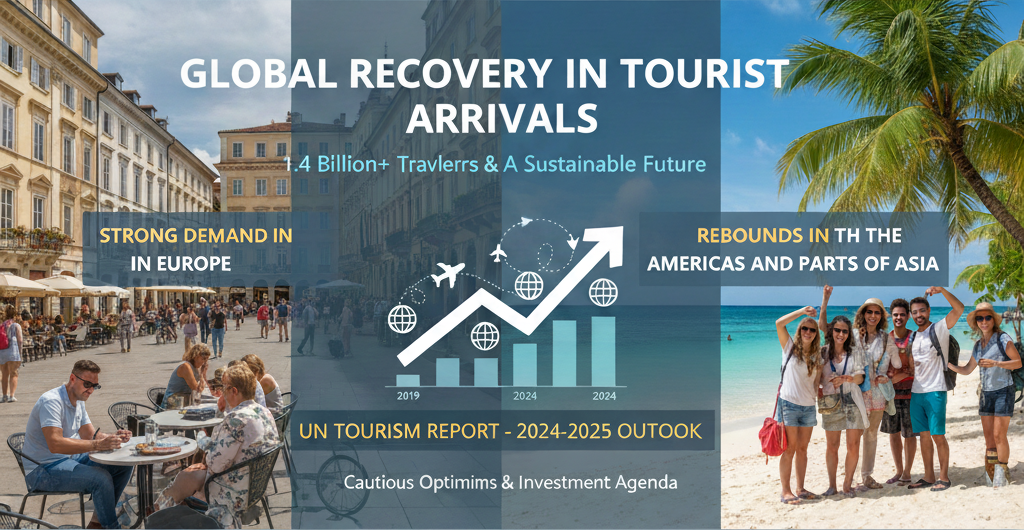
After a turbulent few years, international tourism has bounced back in a way that would have looked optimistic not long ago. According to UN Tourism’s latest barometer, 2024 marked a near-full recovery of international arrivals compared with 2019, with roughly 1.4 billion overnight visitors recorded that year, a recovery driven largely by strong demand in Europe and ongoing rebounds in the Americas and parts of Asia.
The headline figures reflect several clear drivers. Pent-up demand for travel continued to release after the pandemic years, consumers showed a renewed willingness to spend on experiences, and many destinations relaxed entry rules and ramped up promotions. At the same time, domestic tourism remained a major stabiliser in many markets, keeping local businesses alive even when international flows lagged. These patterns are echoed in independent analyses from travel-industry bodies, which note both higher spending per traveller and rising employment in travel and tourism sectors during 2024.
Looking forward into 2025, most expert surveys and institutional forecasts expect continued growth, generally modest, in the order of a few percent as travel normalises and previously undervisited regions (notably parts of Asia and the Pacific) regain momentum. UN Tourism’s panel of experts expected international arrivals to grow 3–5% in 2025 compared with 2024, a projection that assumes no major new global shocks. That pace would translate into steady gains in tourism receipts and jobs, though growth will be uneven by region.
But the recovery story is not purely about aggregate gains. Analysts warn that headline numbers mask important structural shifts: changing traveller preferences (shorter stays but more frequent trips), a faster return of higher-spending business and long-haul tourists to some hubs, and a widening gap between destinations that can manage sustainable infrastructure growth and those that cannot. Sustainability, digital transformation, and workforce shortages are now front-line concerns for destinations seeking resilient, long-term tourism growth. Industry reports emphasise that while economic indicators look healthy, policymakers and businesses must invest in climate resilience, skills, and inclusive planning to turn short-term gains into durable benefits.
In short, the global tourist arrival story for 2024–25 reads like cautious optimism: impressive recovery numbers coupled with a clear agenda of adaptation and investment if that recovery is to be fair, resilient, and lasting.